Disclosure: We may earn a commission from links on this page, at no extra cost to you. How we earn
This article contains affiliate links. If you make a booking through these links, we may earn a commission at no extra cost to you. About & Affiliate Disclosure
Quick Answer
At a glance
- Best time
- May–Sep; late Nov–Dec for markets
- Time needed
- 5 to 7 days
- Currency
- Polish złoty (PLN)
- Language
- Polish
- Getting around
- PKP Intercity trains; tolls on some motorways
Poland is big by Central European standards, so the decisions are which season, which city to base yourself in and how much of the country to cover by train. Most visitors start in Kraków. All prices and dates below were checked on 4 October 2026.
Poland itineraries: 3, 7, 10 and 14 days
Poland links well by train: Kraków and Warsaw are a little over 2 hours apart, and Zakopane is a bus ride from Kraków. Pick the length that fits your holiday.
Kraków in three days
Best for A short city break, any season
- Kraków 2 nights
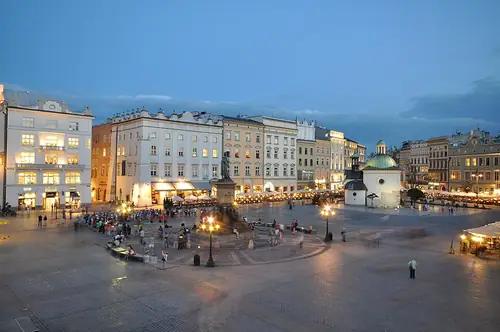
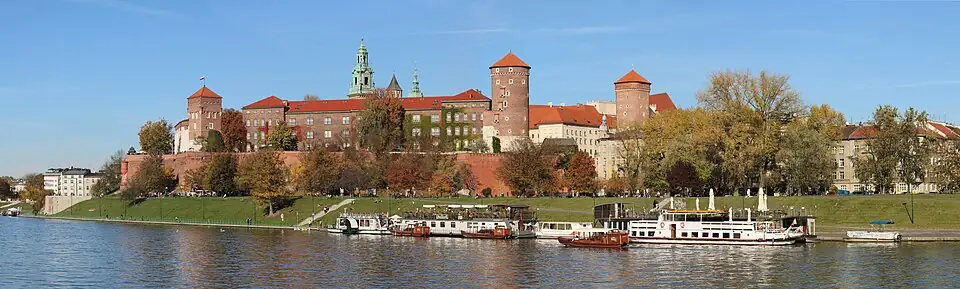
Main Market Square and the Cloth Hall, Wawel Castle, Kazimierz and Podgórze
Getting around Walk the centre; a 24-hour ticket (20 zł) covers trams, and the airport train is 20 zł.
Kraków and Warsaw
Best for A first trip, any season
- Kraków 4 nights
The same city days, with Wieliczka Salt Mine and Auschwitz-Birkenau Memorial each on a day of their own
- A little over 2 h by trainWarsaw 2 nights
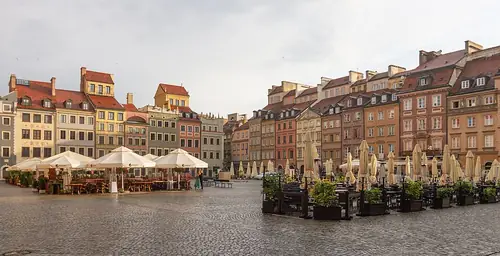
The Old Town, the Royal Castle, the Warsaw Rising Museum and the POLIN Museum
Getting around PKP Intercity links the two cities in a little over 2 hours, so no flight is needed.
Cities and mountains
Best for A balanced first trip, summer or winter
- Kraków 4 nights
The same city days, with Wieliczka Salt Mine and Auschwitz-Birkenau Memorial each on a day of their own
- About 2 to 3 h by busZakopane 2 nights
The Gubałówka funicular and the Kasprowy Wierch cable car for the Tatras
- About 2 to 3 h by bus to Kraków, then a little over 2 h by trainWarsaw 3 nights
The Old Town and Royal Route, the museums, then Praga and Łazienki Park
Getting around For Zakopane the bus is usually faster than the train; the way on to Warsaw runs back through Kraków.
Two weeks, mountains to the Baltic
Best for A full first trip with time for every region
- Kraków 5 nights
The same city days, with Wieliczka Salt Mine and Auschwitz-Birkenau Memorial each on a day of their own
- About 2 to 3 h by busZakopane 3 nights
The Gubałówka funicular and the Kasprowy Wierch cable car for the Tatras
- About 2 to 3 h by bus to Kraków, then a little over 2 h by trainWarsaw 3 nights
The Old Town and Royal Route, the museums, then Praga and Łazienki Park
- About 2 h 20 min by trainGdańsk 2 nights
The Baltic coast: milder summers, windier winters, and a Christmas market until 23 December
Getting around Poland uses the złoty, not the euro. Fast PKP Intercity trains cover Warsaw to Gdańsk in about 2 h 20 min.
Poland month by month
The climate is continental: warm summers, cold winters, and most rain in summer, usually as short storms. The figures are IMGW-PIB’s 1991-2020 normals for Kraków, rounded. The Baltic coast around Gdańsk is milder in summer and windier in winter, and the Tatra mountains around Zakopane are much colder and snowier than the cities.
| Month | Kraków high / low | Rain (approx.) | Best for |
|---|---|---|---|
| January | 2°C / -5°C | 40 mm | Lowest prices, skiing in the Tatras |
| February | 4°C / -4°C | 30 mm | Quiet city breaks, snow in the mountains |
| March | 8°C / -1°C | 40 mm | Early spring, few crowds |
| April | 15°C / 4°C | 45 mm | Easter, mild sightseeing |
| May | 20°C / 9°C | 75 mm | Green parks, comfortable walking |
| June | 23°C / 12°C | 80 mm | Long evenings, the best all-round month |
| July | 25°C / 14°C | 100 mm | Warmest, Baltic beaches, busiest |
| August | 25°C / 13°C | 70 mm | Summer holidays, mountain hiking |
| September | 20°C / 9°C | 65 mm | Warm days, thinner crowds |
| October | 14°C / 5°C | 50 mm | Autumn colours, cheaper hotels |
| November | 8°C / 1°C | 40 mm | Christmas markets from 20 November |
| December | 3°C / -3°C | 35 mm | Markets, lights, nativity scenes |
From December to February, nights drop below freezing, so dress for long evenings outdoors: see our guides to packable down jackets, winter boots for travel, thermal base layers and heated gloves.
Best time to visit Poland by trip type
Christmas markets (late November to early January)
Kraków is the classic choice. Its market on the Main Market Square runs from 27 November 2026 to 6 January 2027, according to the City of Kraków’s Kraków Card listing for the organiser ARTIM; the organiser’s earlier call for traders gave 3 or 6 January as the end date, so check before planning around the last days. Expect a lit tree beside the Cloth Hall, stalls of ceramics, leather goods, jewellery and decorations, and Polish food such as pierogi, grilled oscypek (smoked sheep’s cheese from the Tatras) and obwarzanek rings, with hot chocolate to warm up. By tradition, the city’s nativity scene makers bring their glittering szopki to the square on the first Thursday of December, which is 3 December in 2026. Our Kraków city guide has the market details, where to stay and the airport train in one place.
Two other Polish markets are worth knowing. Wrocław runs from 20 November 2026 to 7 January 2027 (closed 24 and 25 December and 1 January), one of the longest seasons in Europe, and Gdańsk runs from 20 November to 23 December 2026. To compare them with Prague, Vienna and the German markets, see Christmas markets in Europe 2026, and for a multi-city trip, Kraków pairs well with Prague, Vienna and Budapest. The Christmas market packing list covers what to wear.
Ski season (December to March)
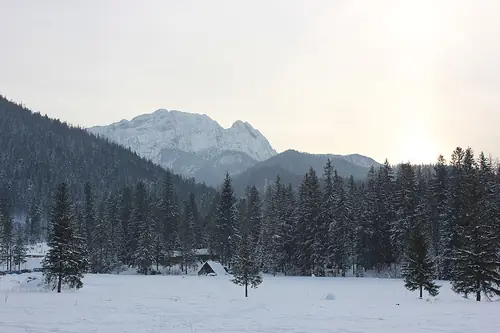
Zakopane, below the Tatra mountains in the far south, is Poland’s winter resort town, about 2 to 3 hours from Kraków by bus. Snow depends on the winter, so check the resort’s own report before booking a ski week.
Summer (June to August)
Summer is for the Baltic coast around Gdańsk, hiking in the Tatras and long evenings in the city squares. July and August are the busiest months and the wettest, mostly in short storms; June and early September give similar weather with fewer people.
Spring and autumn (April to May, September to October)
The shoulder months suit city breaks best: comfortable walking temperatures, cheaper rooms than summer, and shorter queues at Wawel and Wieliczka.
Where to stay in Poland
For a first trip, base yourself in Kraków and do Wieliczka and the Auschwitz-Birkenau Memorial as day trips. Stay in the Old Town to walk everywhere, or in Kazimierz for better value and the best café and food scene; our Kraków city guide compares the districts, and best budget hotels in Kraków names hotels by area. Add two or three nights in Warsaw or Gdańsk if you have a week.
How much does Poland cost per day?
Poland is one of the cheaper countries in the EU; see where it ranks in the cheapest European countries to visit in 2026. Accommodation swings most with dates (Christmas market weekends, Easter and summer weekends are the peaks), so check live prices. The fixed costs below come from official 2026 price lists in Kraków.
| Item | Adult price |
|---|---|
| Kraków 60-minute KMK ticket | 8 zł |
| Kraków 24-hour ticket, zone I | 20 zł |
| Airport train to Kraków Główny | 20 zł |
| Wawel Castle, 1st and 2nd floor with audio guide | 95 zł |
| Wawel Crown Treasury | 47 zł |
| Wieliczka Salt Mine, Tourist Route in English | around 122 to 139 zł, by season |
| Auschwitz-Birkenau Memorial | Free entry pass; guided tours are paid |
A day of Kraków transport plus Wawel comes to around 115 zł before food and a bed. Meals at milk bars and market stalls stay cheap by Western European standards.
Getting around Poland
By train. PKP Intercity runs the long-distance network, and its fastest Express InterCity Premium trains link Kraków and Warsaw in a little over 2 hours. Regional operators cover shorter routes: in Kraków, Koleje Małopolskie runs the line from the airport through Kraków Główny to the town of Wieliczka.
By bus. For Zakopane, the bus is usually faster than the train, at about 2 to 3 hours.
By car. Poland has no vignette. Some motorway sections, including the A4 between Kraków and Katowice, charge a toll per section, and state-run sections can be paid through the official e-TOLL system. Most other roads are free for cars. In Kraków’s Old Town, leave the car and walk or take the tram.
Entry requirements, money and connectivity
Entry. Poland is in the Schengen area, so the 90-days-in-180 rule applies across all member states; see our Schengen 90/180 rule guide. Non-EU visitors are registered by the biometric Entry/Exit System at the border, and ETIAS has not started yet: our EES and ETIAS guide tracks both.
Money. Poland uses the Polish złoty (PLN), not the euro. Cards are widely accepted, including at Kraków’s public transport ticket machines. Whenever a card terminal or cash machine offers to charge you in your home currency, decline and choose złoty: dynamic currency conversion rates are usually worse than your bank’s.
Mobile data. A Europe eSIM works across Poland and its neighbours; compare options in our best eSIM for Europe guide.
- Activate before you fly: data works on arrival
- Plans for 200+ countries from a few dollars
- Keep your number; no physical SIM swap
What to pack for Poland
Four picks from our gear guides that suit this trip. Each card opens the live Amazon price; the links below lead to the full comparisons.
25 x 18 x 4 cm, 254 g, 2.1 L. Locking zips, a cut-resistant double-cable strap, an RFID passport pocket and a strap that clips to a chair. Reader’s Digest’s best crossbody for travel.
Check price on Amazon Live price on AmazonThe best value compression set going. A double-zip pulls the air out so a week of clothes shrinks to a few inches thick, and you get eight pieces (cubes plus a shoe and laundry bag) for roughly the price of one branded cube. The fabric is thin and the zips aren’t lifetime kit, but for the money nothing beats it.
Check price on Amazon Live price on AmazonThe reliable all-rounder: three USB-C and two USB-A ports, plugs for 200+ countries, and a built-in fuse with a spare. The adapter most people should buy.
Check price on Amazon Live price on AmazonModel A1259, 10,000mAh, about 37Wh, 215 g. Two phone charges in a jacket pocket, and small enough that the two-bank limit never becomes a question.
Check price on Amazon Live price on AmazonFrequently Asked Questions
What is the best time to visit Poland?
May to September is the best time for most trips, with average highs of about 20 to 25°C in Kraków according to IMGW-PIB’s 1991-2020 climate normals. June and September are the sweet spot: warm, long days and fewer crowds than July and August. For a winter city break, go from late November to early January, when Kraków, Wrocław and Gdańsk hold their Christmas markets.
When are the Christmas markets in Poland in 2026?
Kraków’s market on the Main Market Square runs from 27 November 2026 to 6 January 2027, according to the City of Kraków’s Kraków Card listing for the organiser ARTIM. Wrocław’s runs from 20 November 2026 to 7 January 2027, closed on 24 and 25 December and 1 January, and Gdańsk’s from 20 November to 23 December 2026. Entry to all three is free.
How much does a trip to Poland cost per day?
Accommodation varies most with dates, so check live prices. The fixed costs are modest: in Kraków, a 60-minute public transport ticket costs 8 zł and a 24-hour ticket for zone I 20 zł, the Wawel Castle ticket for both floors 95 zł, and an English-language tour of the Wieliczka Salt Mine around 122 to 139 zł depending on the season.
Is it free to visit Auschwitz-Birkenau?
Entry to the grounds of the Auschwitz-Birkenau Memorial is free, but every visitor needs a personalised entry pass booked online at visit.auschwitz.org, the museum’s only booking system. During the busiest hours, entry is only possible with a guide-educator, which is a paid service. A general guided tour lasts about 3.5 hours and covers both Auschwitz I and Birkenau.
Do I need a vignette to drive in Poland?
No. Poland has no vignette for cars. Instead, some motorway sections charge a toll per section, paid at toll gates or electronically, and state-run sections can be paid through the official e-TOLL system. Most other roads are free for cars.
Can I pay in euros in Poland?
Poland uses the Polish złoty (PLN), not the euro. Cards are widely accepted, including on Kraków’s public transport ticket machines. When a card terminal or cash machine offers to charge you in your home currency, decline and pay in złoty, because that dynamic currency conversion rate is usually worse than your bank’s.
Start planning your Poland trip
Compare a few dates before you book: the Christmas market weekends and Easter fill fastest in Kraków.