Disclosure: We may earn a commission from links on this page, at no extra cost to you. How we earn
This article contains affiliate links. If you make a booking through these links, we may earn a commission at no extra cost to you. About & Affiliate Disclosure
Quick Answer
- Best overall: September, then May and June, for mild weather and long days.
- Christmas markets: Munich 20 November to 24 December 2026; Berlin from 23 November, Gendarmenmarkt to 31 December.
- Winter: Berlin’s monthly mean is about 1 to 2°C from December to February.
- Trains: ICE Sprinter Berlin to Munich in about four hours; Super Sparpreis from 17.99 euros.
- Driving: no motorway toll for cars, but a green sticker for city low-emission zones.
At a glance
- Best time
- May–Jun, Sep; late Nov–Dec for markets
- Time needed
- 7 to 10 days
- Currency
- Euro (EUR)
- Language
- German
- From the airport
- Berlin Brandenburg (BER): S-Bahn / RE (ABC ticket), 30–50 min
- Visa
- Schengen area rules apply
- Getting around
- Deutsche Bahn ICE; no car motorway toll
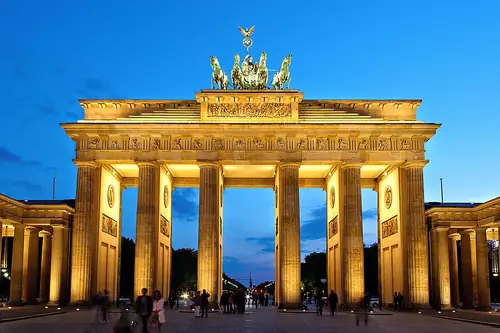
Germany is a big country with two very different city breaks at either end: Berlin in the flat north-east, and Munich in the south, an hour’s drive from the Alps. Both have a long Christmas-market season, fast trains between them and a summer that is pleasant rather than hot. Every date and price below was checked on 4 October 2026.
The best time to visit Germany, month by month
Temperatures are the Deutscher Wetterdienst’s 1991-2020 monthly means for the Berlin-Tempelhof station, averaged over day and night.
| Month | Berlin mean (°C) | Best for |
|---|---|---|
| January | 1.2 | Museums, quiet cities, low hotel prices |
| February | 2.2 | Museums and indoor sights |
| March | 5.2 | Early spring city breaks |
| April | 10.4 | Parks and palace gardens waking up |
| May | 14.8 | City breaks before summer |
| June | 18.1 | Long evenings, lakes, outdoor sightseeing |
| July | 20.2 | Warmest month; busiest at the big sights |
| August | 19.8 | Lakes, day trips; still busy |
| September | 15.2 | The best all-round month |
| October | 10.2 | Autumn colours, fewer visitors |
| November | 5.4 | Christmas markets from 20 and 23 November |
| December | 2.3 | Christmas markets, lights and ice rinks |
Munich is close to Berlin on average (the City of Munich’s statistics give an annual mean of about 10°C for the München-Stadt station, against 10.4°C in Berlin), but sits at about 515 metres, so January is a touch colder, at around 1°C.
What to pack for Germany
Four picks from our gear guides that suit this trip. Each card opens the live Amazon price; the links below lead to the full comparisons.
25 x 18 x 4 cm, 254 g, 2.1 L. Locking zips, a cut-resistant double-cable strap, an RFID passport pocket and a strap that clips to a chair. Reader’s Digest’s best crossbody for travel.
Check price on Amazon Live price on AmazonThe best value compression set going. A double-zip pulls the air out so a week of clothes shrinks to a few inches thick, and you get eight pieces (cubes plus a shoe and laundry bag) for roughly the price of one branded cube. The fabric is thin and the zips aren’t lifetime kit, but for the money nothing beats it.
Check price on Amazon Live price on AmazonThe reliable all-rounder: three USB-C and two USB-A ports, plugs for 200+ countries, and a built-in fuse with a spare. The adapter most people should buy.
Check price on Amazon Live price on AmazonModel A1259, 10,000mAh, about 37Wh, 215 g. Two phone charges in a jacket pocket, and small enough that the two-bank limit never becomes a question.
Check price on Amazon Live price on AmazonGermany by trip type
Christmas markets (late November to 24 December)
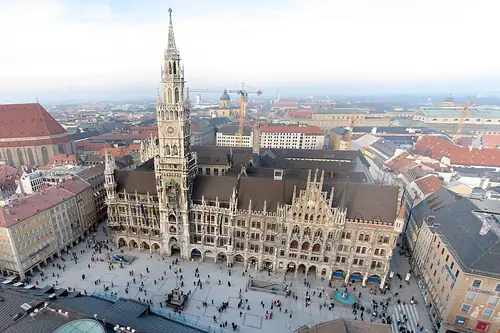
Germany invented the format, and most of its markets follow one rule: open from late November, closed on 23 or 24 December. The City of Munich says that from 2026 the Christkindlmarkt on Marienplatz opens on the Friday before Totensonntag, so it runs from 20 November to 24 December 2026. Berlin’s markets wait until the day after Totensonntag and open on 23 November, and Berlin is the big exception on closing dates: Berlin.de lists the WeihnachtsZauber on Gendarmenmarkt to 31 December and the Berliner Weihnachtszeit at the Rotes Rathaus, with its ice rink and big wheel, to 3 January 2027.
The markets are about crafts, nativity figures, gingerbread, roasted almonds, hot chocolate, lights and concerts. Pick the city by your dates: before 23 December, Munich for the classic Bavarian market under the town hall; between Christmas and New Year, Berlin, where several markets stay open. Our Christmas markets 2026 guide adds Nuremberg, Dresden and Cologne, and Christmas markets by train links Nuremberg, Munich, Salzburg and Vienna in one route. Pack for long evenings outdoors with our Christmas market packing list.
City breaks (spring and autumn)
May, June and September are the easy months: mean temperatures of about 15 to 18°C in Berlin, long days and open-air everything. Berlin rewards three or four days of museums and history, and Munich three days of old town, palaces and the Deutsches Museum. Book the big sights ahead: the Reichstag dome is free but needs advance registration with the German Bundestag.
Summer (June to August)
Summer is warm rather than hot, with Berlin’s July mean around 20°C. It is lake season around both cities and the best time for a day trip to Neuschwanstein, though also the busiest. The Bavarian Palace Administration sells Neuschwanstein tickets for 21 euros for adults, visits are by guided tour only, and the box office often sells out early in the day, so book online.
How much does a day in Germany cost?
Germany is mid-priced for Western Europe: rooms in Berlin are usually cheaper than in Munich, and transport and museums have clear published prices.
| Item (2026) | Price | Source |
|---|---|---|
| Berlin single ticket, zones AB | 4.00 euros | VBB |
| Berlin 24-hour ticket, zones AB | 11.20 euros | VBB |
| Munich Airport-City-Day-Ticket | around 17.50 euros | MVV |
| Museum Island day ticket, Berlin | 24 euros | Staatliche Museen zu Berlin |
| Neuschwanstein Castle | 21 euros (adult) | Bavarian Palace Administration |
| Deutsche Bahn Super Sparpreis | from 17.99 euros (2nd class) | Deutsche Bahn |
| Deutschland-Ticket | 63 euros a month | Deutsche Bahn |
Rooms climb on market weekends in late November and December, especially in Munich. Price a midweek stay against a weekend one, and see the cheapest European countries to visit if Germany stretches your budget.
Getting around Germany
Flying in? Our route pages cover Berlin to Vienna, Berlin to Prague and Berlin to Budapest if you are combining Germany with Austria, the Czech Republic or Hungary, and Munich to Malaga for a winter-sun escape from Bavaria.
Entry rules, money and staying connected
Entry: Germany is in the Schengen area, so non-EU visitors count their days under the Schengen 90/180 rule. The EU’s biometric Entry/Exit System registers non-EU travellers at the external border; our EES and ETIAS guide explains what to expect and the status of ETIAS.
Money: Germany uses the euro. Cards and contactless payments are accepted in most places, but some small cafés and market stalls still prefer cash. When a card terminal or ATM offers to charge you in your home currency, decline and pay in euros.
Data: a travel eSIM gets you online on landing; see the best eSIM for Europe.
- Activate before you fly: data works on arrival
- Plans for 200+ countries from a few dollars
- Keep your number; no physical SIM swap
Frequently Asked Questions
What is the best month to visit Germany?
September is the best all-round month: Berlin’s monthly mean temperature is about 15°C in the Deutscher Wetterdienst’s 1991-2020 normals, the summer crowds have gone and the days are still long. May and June are close behind. For Christmas markets, go between late November and 23 December, when every big market is open.
When do the Christmas markets in Germany open in 2026?
Munich’s Christkindlmarkt on Marienplatz opens on 20 November 2026 and runs to 24 December. Berlin’s big markets open on 23 November, the day after Totensonntag: Gendarmenmarkt runs to 31 December, Alexanderplatz to 26 December and the Rotes Rathaus market to 3 January 2027. Most other German markets close on 23 or 24 December.
How cold is Germany in winter?
Cold but rarely extreme in the cities. Berlin’s monthly mean temperature is about 1 to 2°C from December to February in the Deutscher Wetterdienst’s 1991-2020 normals, and Munich’s January mean is about 1°C. Evenings at a Christmas market feel colder than the numbers, so pack a warm jacket, thermal layers and waterproof boots.
How do you get between Berlin and Munich?
By ICE train. Deutsche Bahn’s ICE Sprinter runs between the two city centres in about four hours, stopping only at Nuremberg, Erfurt and Halle. Super Sparpreis fares start at 17.99 euros in 2nd class and are tied to the booked train, so book early for the lowest prices.
Do I need a vignette to drive in Germany?
No. Germany charges no general motorway toll on cars; the toll applies to goods vehicles over 3.5 tonnes. Cities such as Berlin and Munich do have low-emission zones, and cars registered abroad also need a green emissions sticker to drive inside them.
What currency does Germany use, and are cards accepted?
Germany uses the euro. Cards and contactless payments are accepted in most shops, hotels, museums and on public transport, but some small cafés and market stalls still prefer cash, so carry a little. If a card terminal or ATM offers to charge you in your home currency, decline and pay in euros: the rate it applies is usually worse.
Start planning your Germany trip
Pick the season first, then the city: Berlin for history, museums and markets that run past Christmas, Munich for the Marienplatz market and the Alps on the horizon. Pack a packable down jacket, winter boots and a thermal base layer for any trip from November to March, and see where to go in November and where to go in December to compare Germany with the rest of Europe.