Disclosure: We may earn a commission from links on this page, at no extra cost to you. How we earn
This article contains affiliate links. If you make a booking through these links, we may earn a commission at no extra cost to you. About & Affiliate Disclosure
Quick Answer
- Cheapest overall: mid-January to early March and the early-December lull, often 30 to 40 percent off peak.
- Best value weather: late May to early June, mild and mostly dry before the rains.
- Avoid for price and crowds: cherry blossom (late March to mid-April), Golden Week, Obon and New Year.
- First trip: 10 days on the Golden Route, Tokyo to Osaka, with single tickets rather than a JR Pass.
- Daily budget: 60 to 90 US dollars for backpackers, 130 to 220 for mid-range comfort.
At a glance
- Best time
- Late May to early June, late October to early December
- Time needed
- 10 days for a first trip
- Daily budget
- About 60 to 90 USD a day on a budget, 130 to 220 mid-range
- Currency
- Japanese yen (JPY)
- Language
- Japanese
- Plugs
- Type A, 100 V
- Visa
- Visa-free up to 90 days for many
- Getting around
- Shinkansen between cities, Suica or ICOCA card in town
Japan itineraries that work
Most first trips follow the Golden Route from Tokyo to Kyoto and Osaka, because the Shinkansen makes it effortless: Tokyo to Kyoto takes about 2 hours 15 minutes. Fly into Tokyo and home from Osaka’s Kansai airport so you never backtrack. Pick the length that fits your holiday; the full Japan itinerary guide has every day in detail.
Tokyo and Kyoto in a week
Best for A first taste of Japan, any season
- Tokyo 4 nights
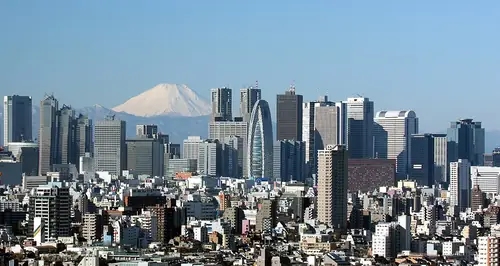
Shibuya Crossing and Meiji Shrine, Asakusa and Ueno, an evening in Shinjuku, a day trip to Nikko or Kamakura
- About 2 h 15 by ShinkansenKyoto 2 nights
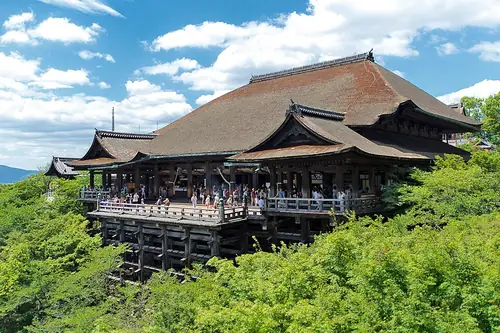
Fushimi Inari before 8 am, Higashiyama and Kiyomizu-dera, the Arashiyama bamboo grove, a half day with the deer in Nara
Getting around Single tickets: Tokyo to Kyoto is about 14,000 yen one way, so a JR Pass does not pay off. From Kyoto, the JR Haruka reaches Kansai airport in about 75 minutes.
The Golden Route
Best for First trip, spring or autumn
- Tokyo 3 nights
Shibuya, Asakusa, Ueno and Shinjuku, with one free day for a neighbourhood like Yanaka or Shimokitazawa
- About 80 min by Romancecar from ShinjukuHakone 1 night
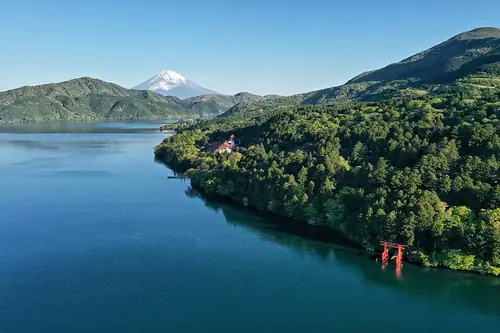
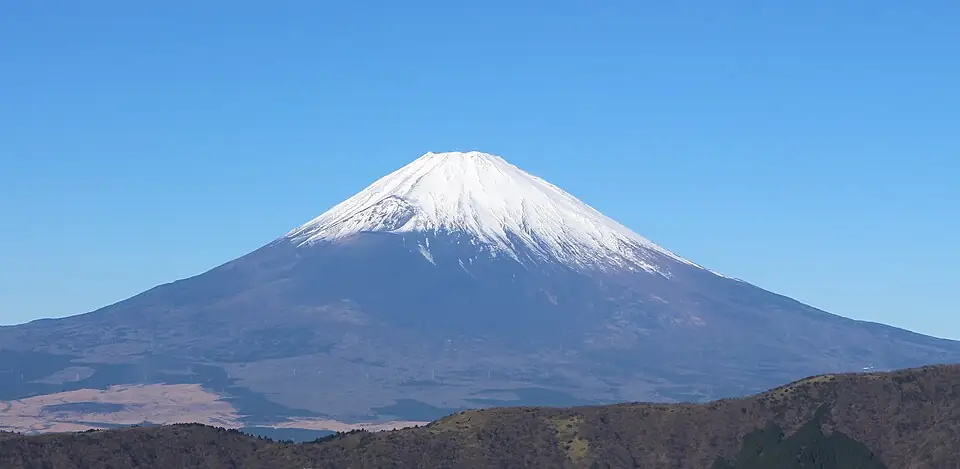
The ropeway loop over Owakudani, Lake Ashi, Mount Fuji views on a clear morning, a night in a ryokan with an onsen
- About 2 h by Shinkansen from OdawaraKyoto 3 nights
Fushimi Inari, Gion at dusk, Kinkaku-ji, Arashiyama, a half day in Nara
- About 15 min by ShinkansenOsaka 2 nights
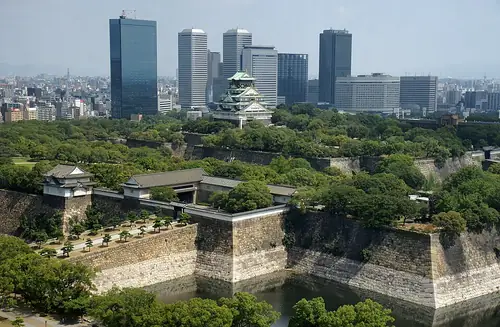
Dotonbori street food, Kuromon market, Osaka Castle, then the flight home from Kansai
Getting around One direction, no backtracking: single tickets and a Suica or ICOCA card usually beat the 50,000-yen JR Pass here.
Two weeks, Tokyo to Hiroshima
Best for A first trip with time, or a second trip
- Tokyo 4 nights
The big districts plus a day trip to Nikko or Kamakura
- About 80 min by RomancecarHakone 1 night
Ryokan, onsen and the ropeway loop
- About 2 h by ShinkansenKyoto 4 nights
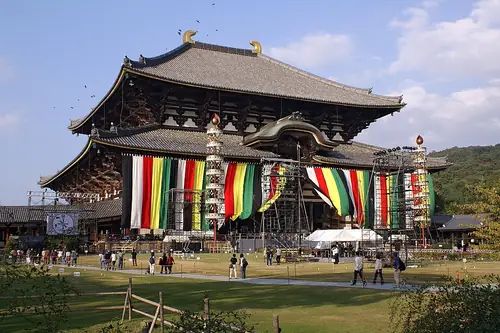
Temples at an easy pace and a full day in Nara
- About 1 h 40 by ShinkansenHiroshima 2 nights
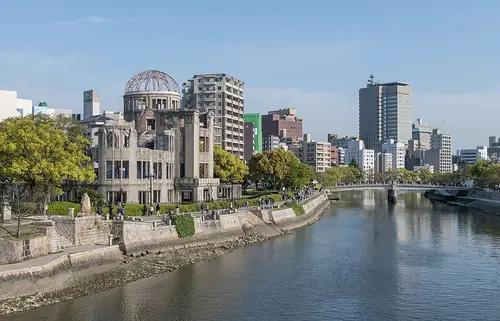
Peace Memorial Park and Museum, the ferry to Miyajima’s floating torii
- About 1 h 30 by ShinkansenOsaka 2 nights
Street food and a last night out before Kansai airport
Getting around The only route here where the 7-day JR Pass can pay off: activate it for the long legs, and price single tickets first if you finish in Osaka rather than back in Tokyo.
Winter: Tokyo and Niseko powder
Best for Skiers and snowboarders, January to February
- Tokyo 3 nights
City, winter illuminations, a Hakone onsen day if you have the energy
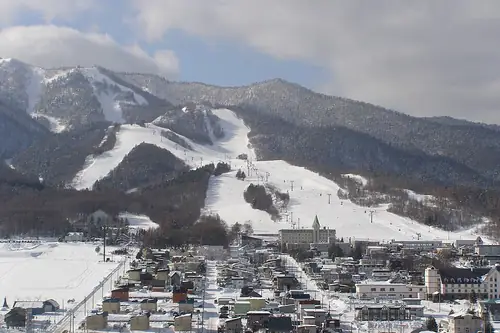
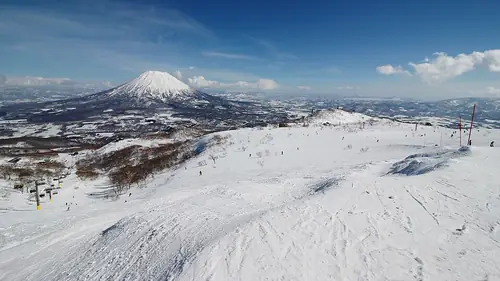
- Flight to New Chitose, then ski busNiseko 4 nights
Four linked resorts, night skiing and an onsen rest day; add a night in Sapporo for the Snow Festival in early February
Getting around Hokkaido is a flight, not a rail leg: fly Tokyo to New Chitose, then take a reservation-only ski bus (about 3 to 3.5 hours) or the train via Otaru.
How long to give each place, if you build your own route:
| Place | Best months | Stay | Good to know |
|---|---|---|---|
| Tokyo | Late Mar to May, Oct to Nov (good year-round) | 3 to 4 days | The safe anchor in any season |
| Kyoto | Early Apr and Nov for colour, shoulders otherwise | 3 days | Book early for blossom and foliage weeks |
| Osaka | Spring and autumn, food any month | 2 days | Cheaper base for Kyoto and Nara |
| Hiroshima | Spring and autumn | 1 to 2 days | Include Miyajima |
| Hokkaido | Dec to Mar for snow, Jun to Aug for flowers | 4 to 5 days | Fly, do not take the train |
| Okinawa | Apr to Jun, Oct to Nov | 4 to 5 days | Subtropical beaches, typhoon risk late summer |
When and where to go in Japan
| Month | Weather | Crowds | Prices | Best for |
|---|---|---|---|---|
| January | Cold, dry, bright | Low (after Jan 3) | Low | Budget trips, snow, onsen |
| February | Cold, crisp | Low | Lowest | Cheapest fares, skiing, plum blossom |
| March | Cool, blossoms start late | Rising | Rising | Early sakura, value before peak |
| April | Mild, peak sakura | Very high | Peak | Cherry blossoms, classic Japan |
| May | Warm, lovely (avoid GW) | High then easing | Mid-high | Best weather, post-Golden-Week value |
| June | Warm, rainy season | Low | Low-mid | Hydrangeas, low crowds, deals |
| July | Hot, humid, festivals | Moderate | Mid | Fireworks, Hokkaido, mountains |
| August | Very hot, Obon spike | High mid-month | High mid-month | Summer festivals, escaping to the north |
| September | Warm, typhoon risk | Moderate | Mid | Shoulder value, early foliage north |
| October | Crisp, dry, lovely | Rising | Mid-high | Comfortable travel, early koyo |
| November | Cool, peak foliage | High | High | Autumn leaves, clear skies |
| December | Cold, festive lull | Low until Dec 28 | Low then peak | Cheap early-month trips, illuminations |
Tokyo’s average highs climb from around 10 C in winter to 31 C in July and August, then ease back to 12 C by December. Plan around the New Year rush (it eases after January 3), Golden Week (roughly April 29 to May 5) and Obon in mid-August.
Is the JR Pass worth it in 2026?
The nationwide pass jumped about 70 percent in late 2023, and the 7-day Ordinary pass now costs 50,000 yen on the official site (53,000 yen through overseas agents). A one-way Tokyo to Kyoto Shinkansen ticket is about 14,000 yen, so the pass only wins when you keep moving over long distances.
| Trip style | Sample route | Pass worth it? |
|---|---|---|
| Single city | Tokyo only, 5 to 7 days | No, use a Suica/IC card |
| One direction | Tokyo, Kyoto, Osaka, fly home from Kansai | Usually no, buy single tickets |
| Round trip | Tokyo, Kyoto, Hiroshima and back to Tokyo | Usually yes (7-day pass) |
| Wide tour | Tokyo to Kyushu or the north by rail | Often yes, run the numbers |
Regional passes (JR East, JR West, Kansai) are often the smarter buy for focused itineraries. Price your actual route before you commit.
New rules for trips to Japan in 2026
Five changes that affect what you pay or carry this year:
- Departure tax tripled. The International Tourist Tax rose from 1,000 to 3,000 yen per departure on 1 July 2026. It is added to your plane ticket; tickets issued by 30 June 2026 keep the old rate.
- Tax-free shopping is now a refund. Since 1 November 2026 you pay the 10% consumption tax in the shop and claim it back at customs when you leave, using the receipts’ QR codes. Keep your purchases with you until departure.
- Kyoto’s hotel tax went up. Since 1 March 2026 it is charged per person per night: 200 yen for rooms under 6,000 yen, 400 yen up to 19,999 yen, 1,000 yen up to 49,999 yen, and up to 10,000 yen for the most expensive rooms.
- No power-bank use on Japanese airlines. Since 24 April 2026 you may carry at most two power banks of up to 160 Wh in the cabin, and you cannot use or charge them on board.
- The JR Pass costs more through agents. Exchange orders bought abroad now cost 53,000 yen for 7 days; the official online price is still 50,000 yen.
Where to stay in Japan
Prices are for a double room per night, from our city guides:
See the full neighbourhood guides for Tokyo, Kyoto and Osaka.
Daily budget for Japan
| Category | Budget (US dollars) | Mid-range (US dollars) | Comfort (US dollars) |
|---|---|---|---|
| Accommodation | 25 to 45 | 70 to 130 | 160 to 350 |
| Food (3 meals) | 15 to 25 | 35 to 65 | 80 to 160 |
| Transport | 8 to 15 | 20 to 40 | 50 to 100 |
| Activities | 10 to 20 | 25 to 50 | 60 to 120 |
| Daily total | 60 to 90 | 130 to 220 | 350 to 700 |
A bowl of ramen costs about 800 to 1,200 yen, konbini meals keep breakfast and lunch cheap, and tap water is free everywhere. Temple entries are usually 300 to 600 yen, and shrine walks and neighbourhood wandering cost nothing. For a full breakdown, see the Japan budget guide.
Find cheap flights to Japan
Tokyo has two airports: Narita (NRT), the long-haul and budget hub, and Haneda (HND), closer to the city. From Europe, the cheapest fares often connect through the Gulf or Istanbul; from North America, watch ZIPAIR, JAL’s low-cost arm.
- Book 3 to 5 months ahead: fares to Japan rarely drop last-minute.
- Try the other gateways: Osaka (KIX) or Fukuoka (FUK) sometimes beat Tokyo, and fit an open-jaw Golden Route.
- Fly midweek in February or June, the cheapest months of the year, and avoid Golden Week, Obon and New Year.
Stay connected in Japan
A travel eSIM gives you data the moment you land, which matters for train transfers and Kyoto’s bus routes. Japan’s 4G and 5G coverage is fast nationwide, even on the Shinkansen. See our Japan eSIM guide.
- Activate before you fly: data works on arrival
- Plans for 200+ countries from a few dollars
- Keep your number; no physical SIM swap
What to pack for Japan
- Plugs: Japan uses Type A sockets at 100 V. US and Canadian plugs fit; most other travellers need an adapter, and phone and laptop chargers handle 100 V without a converter.
- Shoes you can slip off: you take your shoes off in temples, ryokan, many restaurants and fitting rooms.
- A small towel: many public restrooms have no paper towels or dryers, which is why locals carry a hand towel.
- Cash and a coin purse: cards work in cities, but small restaurants, shrines and rural spots can be cash-only, and you collect a lot of coins.
- A plastic bag for rubbish: public bins are rare, so you carry your rubbish back to your hotel or a konbini.
- Light luggage: on the Tokaido Shinkansen, bags over 160 cm in total dimensions need a seat with an oversized baggage area (book it free with your ticket), and bags over 250 cm are not allowed. Many travellers send big suitcases ahead with a luggage delivery service (takkyubin).
- Power banks: carry at most two, up to 160 Wh, and do not use them on Japanese airlines.
- Layers by season: a rain jacket for June, light breathable clothes for July and August, and a warm coat for December to February.
Four picks from our gear guides that suit this trip. Each card opens the live Amazon price; the links below lead to the full comparisons.
The reliable all-rounder: three USB-C and two USB-A ports, plugs for 200+ countries, and a built-in fuse with a spare. The adapter most people should buy.
Check price on Amazon Live price on AmazonModel A1259, 10,000mAh, about 37Wh, 215 g. Two phone charges in a jacket pocket, and small enough that the two-bank limit never becomes a question.
Check price on Amazon Live price on AmazonA 40L suitcase-style clamshell that zips its harness and hip belt away, so it packs and checks-through like a bag but loads like a backpack. At 22 x 14 x 9 in it sits right at the United/American/Delta limit: the catch is a full-to-the-seams pack has zero margin left if a gate agent measures it.
Check price on Amazon Live price on Amazon61 x 122 cm, listed at 120 g in navy, snap loop and a ventilated carry bag. Rainleaf says it absorbs five times its own weight, and it comes in six sizes. The one most travelers should buy first.
Check price on Amazon Live price on AmazonFrequently Asked Questions
What is the cheapest time to visit Japan?
Mid-January to early March and the early-December lull are the cheapest, with airfares often 30 to 40 percent below the cherry-blossom and autumn peaks. June, outside Golden Week and before the summer rush, is also good value.
Is cherry blossom season worth the higher cost?
Yes if seeing the blossoms is your main goal, but expect peak flight and hotel prices and big crowds from late March to mid-April. For similar mild weather at lower cost, travel in May or early June instead.
When should I avoid visiting Japan for budget reasons?
Avoid Golden Week (late April to early May), Obon in mid-August, and the New Year period from December 29 to January 3. Domestic travel, hotels, and trains spike in price and book out during these holidays.
Is the JR Pass still worth buying in 2026?
Only if you cover a lot of long-distance ground, such as Tokyo to Hiroshima and back within 7 days. The 7-day pass costs 50,000 yen on the official site (53,000 yen through agents), while a one-way Tokyo to Kyoto Shinkansen ticket is about 14,000 yen, so short or one-direction trips are usually cheaper with single tickets and an IC card.
How much does a trip to Japan cost per day?
Budget travelers manage on 60 to 90 US dollars per day including a hostel or business hotel, convenience-store and ramen meals, and local transport. Mid-range travelers should plan for 130 to 220 US dollars per day.
What is the best 10-day Japan itinerary?
For a first trip, spend 3 nights in Tokyo, 1 night in a Hakone ryokan, 3 nights in Kyoto with a half day in Nara, and 2 nights in Osaka, then fly home from Kansai airport. Every leg is a short train ride, and the route never backtracks.
What should I pack for Japan?
Pack a Type A plug adapter if your devices use other plugs (Japan runs on 100 V), shoes you can slip off at temples and ryokan, a small towel because many restrooms have no paper towels, a coin purse for cash, and luggage small enough for the Shinkansen: bags over 160 cm in total dimensions need a seat reservation with an oversized baggage area.
Start planning your Japan trip
Match the month to your wallet: deep winter for empty temples and the lowest prices, late May and June for great weather at softer rates, and the blossom and foliage peaks only if they are the point of the trip.